Slavoj Žižek · The Revolt of the Salaried Bourgeoisie: The New Proletariat · LRB 26 January 2012
Slavoj Žižek · The Revolt of the Salaried Bourgeoisie: The New Proletariat · LRB 26 January 2012.
A thoroughly good read, and one (at least in parts) that echoes my own points…. I mean in regards to the privatisation of intellectual work and thus public thought. And that this is particularly pernicious *now* because hundreds of millions of children (of all ages) are routinely and necessarily using computer technology and proprietary software for all classroom work. (Sure, they also use those fine branded pens and pencils and pads of paper, but you don’t need a special hand to use the pencil or pen or special tools to use any such equipment, and it can be read simply by learning the secret codes, which are taught for free, usually, to all.)
So the question is this:
* A lifetime of licenses routinized into the cost of living, and invisible in the enormous harm such a licensed life would put in play if only by suturing close the possibilities of having it some other way; or
* A lifetime open to innovation, collaboration, production unencircumscribed by closed licenses; markets would be built and profits made on the merit of one’s work and not on the right to work itself.
The Battle Against Food Waste – NYTimes.com
The Battle Against Food Waste – NYTimes.com.
Why are Americans fat? And it’s not just they: it’s a global phenomenon. Sure, it has to do with sugary drinks, sugared foods, and a general avalanche of low-glycemic processed foods that, bite by bite, taste almost good enough but never quite. And, sure, it has to do with modern urbanism and the wholesale destruction of traditional foods and eating patterns. Used to be we didn’t eat in-between meals, unless we were particularly unable to repress our animal instincts and thus uncouth. No longer. Used to be that fancy foods were fancy for a reason and rare because they were fancy; no longer. And used to be that eating alone was a sign of abject loneliness and something avoided. Now, it doesn’t matter if one eats in a group: quite often what I eat is not what you eat, and we thus find ourselves alone while in the company of others. But this is the nature of maximal consumerism.
But I would suggest another point, one raised a while ago by some researchers who tallied the total amount of unexported calories produced in the US and divided it by the population. I don’t have the reference, but far more are produced daily than can be consumed even by the most stalwart of eaters. The result is that, as has been noted by Pollan and others, too much food is way too cheap; and also abundant. And as there is competition in the selling and buying of it, big-box logic prevails, so that one is hounded by the suspicion that what you bought now could have been bought cheaper elsewhere, and that it makes no sense at all to be pennywise when it costs so little in the medium term (forget long) to pay a little more and get so much, so much more, and all in big boxes. Worse being that much of what was just bought is probably perishable. You’ve got to eat it, else, you are simply throwing money away–never mind that it’s food you are throwing away, or at least, its reasonable facsimile thereof.
Too much food too cheap packaged too big and sold brilliantly to those removed from corner stores and markets (where one can get individual portions, say, and where anonymity doesn’t work)–all these things make for fat people. This is not new. And the obvious solution is not new either: Food should cost the consumer (able to afford it; no need to punish the already deprived) what it actually costs. And actual cost includes the impact on the environment, on the health of the consumer; includes the packaging, the resources used, and so on. It is not simply predicated on market value, but on that new category we really need to confront, Real Cost.
But how is Real Cost determined? There are efforts and rather good ones already initiated. And as this is a new thing, the algorithms and considerations will surely change as we gain a deeper understanding of the issues. For instance, remember how it was thought that eating food grown locally was always better? It’s not. Sometimes, it’s *more* expensive and *more* energy consuming than food grown far away and shipped in vast container vessels. But let’s promote equal labour, and take all the hidden costs and benefits into account. There could even be an app for that, one that calculates the Real Cost of this or that thing– But that’s a personal solution, and the real, effective solution must necessarily be one used by the populace at large.
Research Bought, Then Paid For – NYTimes.com
Research Bought, Then Paid For – NYTimes.com.
The point, and one I’ve long argued for, as have many: if public money is used to fund and publish research, then it ought to be made freely accessible to the public that paid for it.
The waste mountain engulfing Mexico City | Environment | guardian.co.uk
Mexico City is facing another crisis, besides the water, food, pollution, crime, governance, etc. It has to do with garbage, which every city is now or will face. The interesting point about the article I cite lies in the last paragraphs, where the issue of getting rid of the trash includes the very difficult one, Who owns the trash before the city takes it?
In 2009, the Mexican federal government suspended plans for building Centros Integrales de Reciclado y Energía (CIRE – Integral Waste-to-Energy Plants) because of heated opposition from local residents in the locations chosen. The CIREs are intended to make use of organic waste to produce compost, recycle inorganic materials and generate electricity.The 2003 Federal Waste Law regulates waste management and procedures for opening and closing waste dumps, but does not clarify who owns the garbage – the source producer, the collector or the waste dump manager? – until such time as it reaches the hands of the municipal or federal authorities, which complicates the use of garbage for profit.\
via The waste mountain engulfing Mexico City | Environment | guardian.co.uk.
Traditional social networks fueled Twitter\’s spread
Traditional social networks fueled Twitter\’s spread.
Not particularly surprising, indeed, the opposite, at least for any of us who actually work in the industry and use (and experiment with) social media. The challenge is not exactly to bring in outsiders, so to speak, but rather to retain those who have joined. There are intangibles but they are not by any means unidentifiable nor even that difficult to work with. And there is a literature to this, including early 20th century advertising but very likely antedating it. Still, I tend to believe the modern notion of community depends hugely on the modern notions of nation.
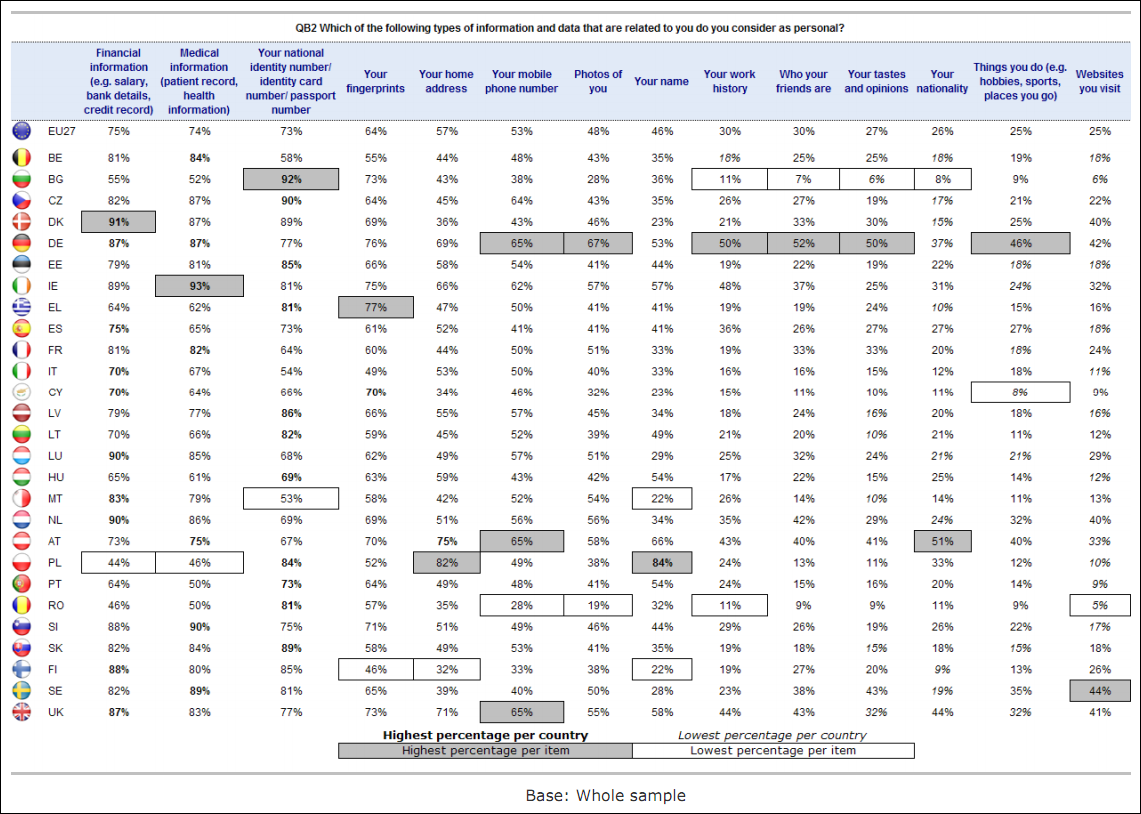
Special_Eurobarometer_359_Page21.png 1141×814
Special_Eurobarometer_359_Page21.png 1141×814.
Fascinating….
Dirty trade: How important are greenhouse-gas emissions from international transport? | vox – Research-based policy analysis and commentary from leading economists
I find the conclusions obvious. But the point is not simply to go local–that desire frequently papers over the pollution, for instance, caused by local trucking, as well as the possible inefficiencies ad hoc local production can get away with, as its small scale can escape scrutiny, but for policy that rewards *long-term* and *sustainable* efficiency. That is, for policies favouring modern sails and related wind technology for ships, for instance, or dirigibles for aircraft, provided those are actually more efficient to run, and also to make. And for policies that tax irresponsible practices–you know, the ones that brought us the 20th century and now this century’s rising sea of mess. (When we tally the real costs of supposedly cheap commodity energy, the expense is profound and yet to be fully plumbed. We are still paying for that litre of fuel and will be doing so for a very long time.)
WTO | 2011 News items – Lamy rebuts UN food rapporteur’s claim that WTO talks hold food rights ‘hostage’
It’s never just about the politics of the local, and it’s always also about global dynamics. Nor is it about self-righteous indignation of the American sort over the apparent loss of sovereignty. Rather, it’s about what is wanted by us, where “us” really means the larger society–the 99 percent. And now is the time to take these questions seriously. That means articulating those priorities that affect us globally and investing in those endeavours that benefit us globally, but also locally. Is this in opposition to capitalism? Not as most of us understand it. It’s probably contrary to monolithic monopoly deployments of capital. That is, contra those entities which have determined and implicitly limited markets and access to them; and for local markets benefiting more and operating not in ignorance of other communities but very much with full knowledge about them.
My aim, my belief is that we–let’s say, all of us, people–can really only survive the challenges our grandparents have visited upon us (no end to them) by networked communities and not by the logic of centralisation that so characterised the long 20th century.
Mysterious blasts, slayings suggest covert efforts in Iran – latimes.com
Mysterious blasts, slayings suggest covert efforts in Iran – latimes.com.
Let’s say that the explosions noted by the Ha’aretz and so many others, as well as the probable downing of the drone, indicate that “we” are at war with Iran. Who’s “we”? The US? Nato? Israel? A combination of the lot? War has so often been fought by proxy, and I doubt that this is an exception. Furthermore, any explosive continuation would simply be a furtherance of the embargoes that have been going on for many years. But as Greenwald and many others have noted, it’s one thing for the US to launch a war whose reasons and costs are held up for accounting, its another to simply do it without accountability.
Electric Cars for Rent Now: Lancé lundi à Paris, Autolib veut changer la route en ville, Actualités boursières
 Comments (1)
Lancé lundi à Paris, Autolib veut changer la route en ville, Actualités boursières.
My notion much earlier this year was not at all unlike this grand effort in Paris to make available electric cars in the manner of VeloLib: a citywide network of rental stations. Infrastructure would be implicitly taken care of, as each station would have charging facilities. And the cost of a vehicle would be immaterial, as one would pay, as one does now for AutoShare or Zip cars, per hour or so.
Paris, however, is a little unusual in two regards, at least. Its population density is high and for those living in the central arrondisements, car ownership is hardly obligatory. Of course, many other heavily developed European cities share these characteristics. But in North America, where car ownership is as much a badge of national identity as a means of transport (and a generation of right wing policies has made sure that there are few alternatives to cars in cities), making available electric cars for rent within urban centres is more of a challenge.
But not an insurmountable one by any means. Manhattan, for instance, resembles Paris in both regards, for instance, as do several other US cities (Chicago, Boston, SF come to mind). And here in Toronto, despite having some of the *worst* streets for cyclists (potholes, lousy visibility, no bike lanes, and a frequently hostile car traffic coming from the suburbs and grudging urban obligations), has its own bike rental system, Bixi. It also has ZipCars, AutoShare, and so on, as parking is both costly and hard to find.
Who would use these electric cars? For starters, all those who now rent hybrids for a few hours to go to the market, run errands, etc.–even go to the airport, say: cheaper than a limousine, it occurs to me (the public transportation, the subway/bus–you take the subway to the end of the line then wait for the ironically named “Rocket” to take you to the actual airport: a trip that takes me, coming from downtown, about an hour). Limos, taxis cost about 60 CAD. one way: a lot.
Besides the occasional if repeated errand, there are many other uses that come to mind. So it’s not that there would not be a market for this. It’s rather that the initial cost to set it up would probably be formidable. But here is where government help comes in. Our current mayor, Rob Ford, has gone on supporting cars over other modes of transport. This has not endeared him particularly among the inner parts of Toronto. But supporting a network of electric rental cars premised on the lines of ZipCar or AutoShare or the new Parisian model, would, in all likelihood, do a great deal to redeem not only Ford among the inner circles but also help with establishing a sustainable electric vehicle market. And given the way the world is going and given the dependencies of the Canadian, esp. the Ontario economy, on the US automobile manufacturing ecosystem (think Sword of Damocles), having such a solution, especially if the cars could be made here, mostly, would be not only a bold step in the right direction but a firm one that would benefit tens of thousands of people.
If only.


 newspeak